
Home-Based Exercises to Complement Your Physiotherapy Sessions
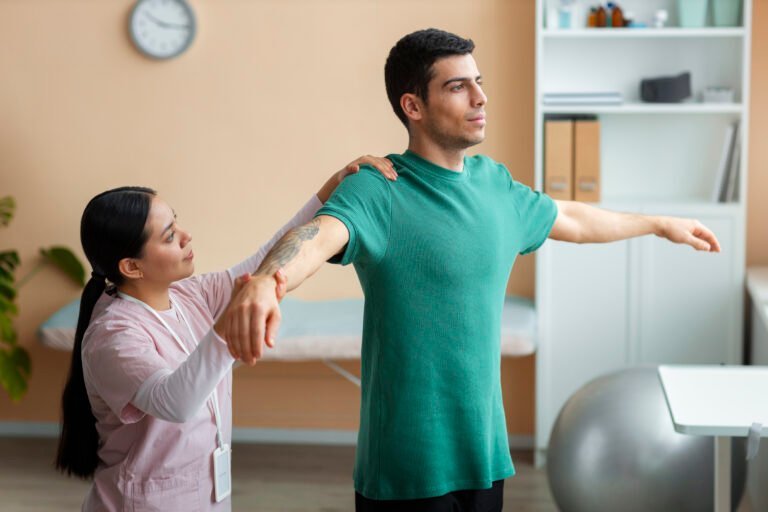
Enhance your recovery and maintain mobility with these simple yet effective home-based exercises that perfectly complement your physiotherapy sessions.
Introduction
Enhance your recovery and maintain mobility with these simple yet effective home-based exercises that perfectly complement your physiotherapy sessions.
1. Stretching Exercises
Stretching improves flexibility, reduces stiffness, and enhances blood circulation, making it a vital part of any physiotherapy program.
A. Hamstring Stretch
Benefits: Relieves lower back pain and improves leg flexibility.
- Sit on the floor with one leg extended and the other bent.
- Reach toward your toes while keeping your back straight.
- Hold for 20-30 seconds and switch sides.
B. Shoulder Stretch
Benefits: Reduces tension and improves shoulder mobility.
- Bring one arm across your chest and hold it with the opposite hand.
- Hold for 20-30 seconds, then switch arms.
2. Strengthening Exercises
Strength-building exercises help restore muscle function and provide better support for joints.
A. Bridge Exercise
Benefits: Strengthens the lower back, glutes, and core.
- Lie on your back with knees bent and feet flat on the floor.
- Lift your hips off the ground, keeping your back straight.
- Hold for a few seconds and lower slowly.
- Repeat 10-15 times.
B. Wall Push-Ups
Benefits: Strengthens the upper body with minimal strain.
- Stand facing a wall and place your palms on it, shoulder-width apart.
- Lower your body towards the wall, then push back up.
- Repeat 10-15 times.
3. Balance and Coordination Exercises
Balance exercises enhance stability and help prevent falls, especially for older adults or those recovering from injuries.
A. Single-Leg Stand
Benefits: Improves balance and strengthens leg muscles.
- Stand on one leg while holding onto a chair or wall for support.
- Hold for 20-30 seconds, then switch legs.
B. Heel-to-Toe Walk
Benefits: Enhances coordination and stability.
- Walk in a straight line, placing the heel of one foot directly in front of the toes of the other.
- Perform for 10-15 steps.
4. Postural Correction Exercises
Poor posture is a common cause of pain and discomfort. These exercises help improve alignment and relieve strain.
A. Chin Tucks
Benefits: Reduces neck pain and improves posture.
- Sit or stand upright and slowly tuck your chin toward your chest.
- Hold for 5 seconds and repeat 10 times.
B. Shoulder Blade Squeeze
Benefits: Strengthens back muscles and promotes proper posture.
- Sit or stand with your arms at your sides.
- Squeeze your shoulder blades together and hold for 5 seconds.
- Repeat 10-15 times.
5. Breathing and Relaxation Exercises
Physiotherapy is not just about movement; relaxation and breathing techniques are equally important for pain management.
A. Diaphragmatic Breathing
Benefits: Reduces stress and improves oxygen flow.
- Lie on your back with one hand on your chest and the other on your abdomen.
- Inhale deeply through your nose, feeling your abdomen rise.
- Exhale slowly through your mouth.
- Repeat for 5-10 minutes daily.
Tips for Safe Home Exercises
- Start slow: Begin with gentle movements and increase intensity gradually.
- Follow proper form: Poor technique can cause more harm than good.
- Stay consistent: Perform exercises regularly for best results.
- Listen to your body: Stop if you experience excessive pain or discomfort.
- Consult your physiotherapist: Always check with your therapist before adding new exercises.
Conclusion
Home exercises play a crucial role in enhancing physiotherapy results, preventing stiffness, and strengthening muscles. By incorporating these simple yet effective movements into your daily routine, you can accelerate your recovery and maintain mobility.
If you’re unsure which exercises are right for you, consult your physiotherapist for guidance. Stay active, stay consistent, and support your healing journey!
Leave a Reply